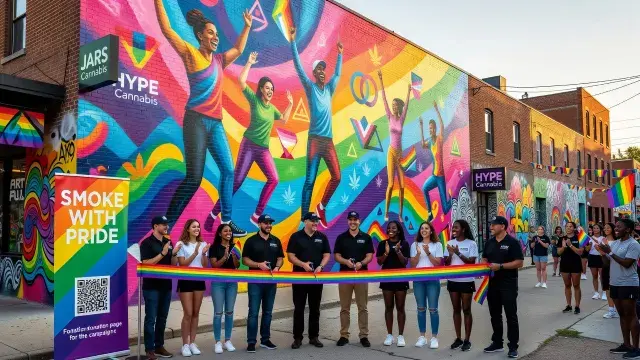
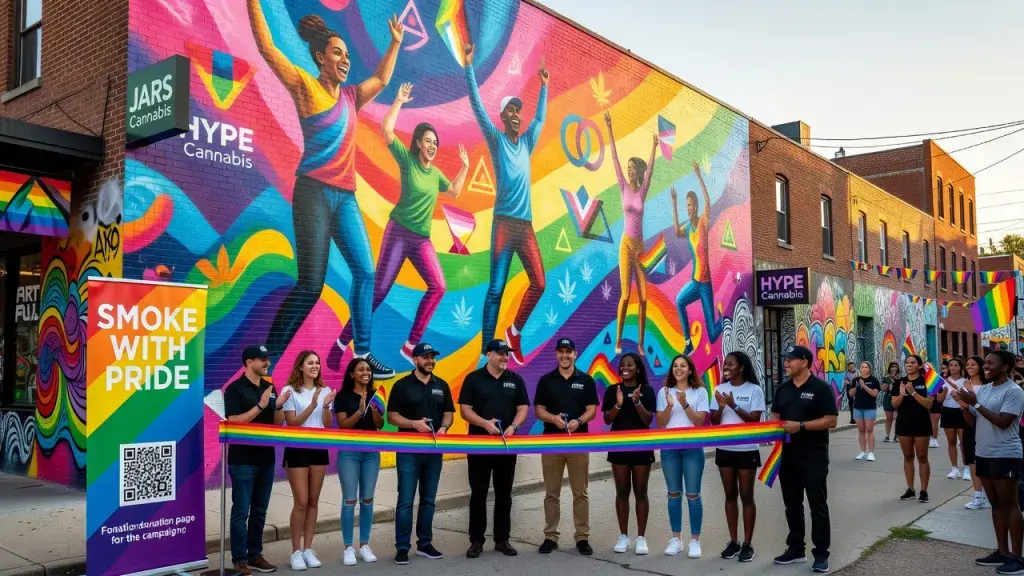
A ribbon was cut in a downtown Ferndale alley this week, but the story underneath it has less to do with paint and more to do with how cannabis operators are choosing to spend marketing dollars. "Polychromatic Super You," a 40-by-25-foot mural by Michigan artist Joey Salamon, now covers a wall at 258 W. Nine Mile Rd. It was commissioned jointly by JARS Cannabis and HYPE Cannabis as the visible centerpiece of a larger campaign called Smoke with Pride, which directs a share of product sales to Detroit's Ruth Ellis Center.
The mechanics matter here as much as the imagery. Under the arrangement, 10 percent of proceeds from HYPE products sold at JARS locations, and 100 percent of proceeds from a dedicated JARS x HYPE Smoke with Pride Kit, go to the Ruth Ellis Center, which provides support services for at-risk LGBTQ+ youth in the region. That kind of SKU-level cause marketing requires more than good intentions; it requires point-of-sale systems and inventory tracking that can isolate specific product lines, tag them to a giving campaign, and report the resulting donations accurately. For multi-state or single-market operators trying to build similar programs, the back-end lift is nontrivial, and it's part of why platforms offering cannabis software for marijuana massachusetts and other regulated markets have built out reporting tools that go beyond basic seed-to-sale compliance into promotional and philanthropic tracking. cannabis software for marijuana massachusetts
Why Retailers Are Investing in Physical Storefronts as Brand Statements
Dispensary marketing in a legal cannabis market operates under real constraints. Advertising rules in most adult-use states restrict where and how cannabis brands can promote themselves, particularly around imagery that could appeal to minors or make health claims. A commissioned mural sidesteps a lot of that friction. It's public art first, brand association second, and it lives in a physical space rather than a paid feed or billboard, which changes both the regulatory calculus and the durability of the message. Ferndale, a market with an established LGBTQ+ community, gives the project a specific local resonance rather than a generic marketing gesture - a distinction that matters when regulators and neighbors alike are watching how cannabis retailers position themselves in mixed-use downtown corridors.
The Compliance and Community-Relations Angle
Cannabis retailers still operate under heightened scrutiny compared with most other retail categories: age-restricted access, packaging and labeling rules, local zoning limits on signage, and in many jurisdictions, outright bans on traditional advertising formats. Public art commissions and nonprofit partnerships offer a way to build community goodwill without running afoul of those restrictions, and they tend to land better with municipal officials than a straightforward ad buy would. That's not a small thing for operators negotiating license renewals or trying to expand into a second location; local government relationships often hinge on exactly this kind of visible, non-transactional community investment.
The QR code embedded in the mural is worth a mention on its own. It routes visitors directly to donation and resource pages for the Ruth Ellis Center, which is a low-cost, low-friction way to convert foot traffic into measurable support - no purchase required, no data on cannabis consumption collected. For an industry still working to normalize its retail presence in downtown commercial districts, that separation between the art, the cause, and the product itself is a deliberate and reasonable line to draw.