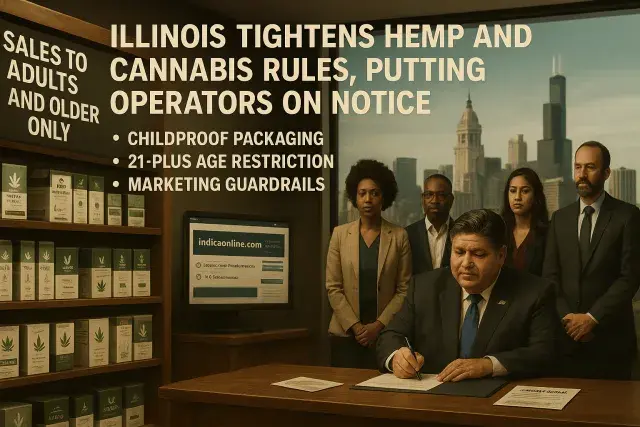
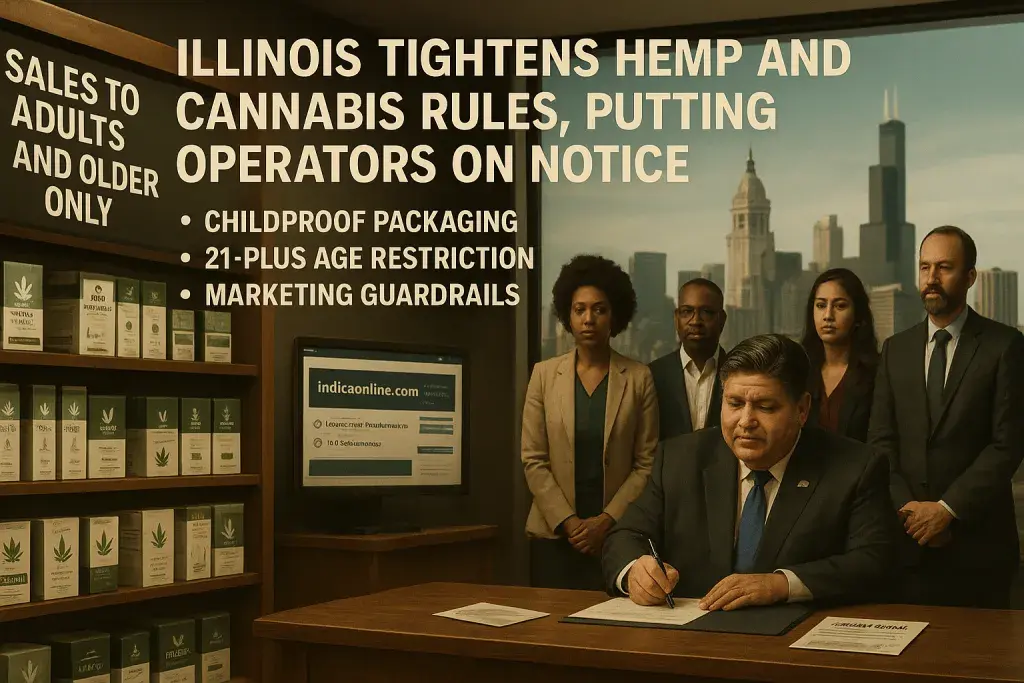
Illinois is moving to close a regulatory gap that has left intoxicating hemp products - delta-8, delta-10, and similar cannabinoid derivatives - operating in a gray zone that licensed cannabis retailers have long found frustrating. Governor JB Pritzker is backing a new set of rules that impose childproof packaging requirements, ban marketing aimed at minors, and restrict sales of intoxicating hemp products to adults 21 and older. The regulations take effect in November, giving operators a defined window to bring products and merchandising into compliance.
What the Rules Actually Require
The core compliance obligations are straightforward, even if the operational lift is not. Products classified as intoxicating hemp must carry compliant packaging - the same tamper-evident, child-resistant standard that licensed dispensaries have met for years under state cannabis rules. Marketing that could be interpreted as targeting children is explicitly prohibited. The age-21 purchase restriction, already in place since last month's statewide ban, now gets reinforced by this broader regulatory framework. For operators already running licensed adult-use dispensaries, platforms like indicaonline.com illustrate how point-of-sale and compliance tools have adapted across markets to handle age verification and product categorization - a reminder that technology infrastructure matters when regulations shift fast. The November effective date means businesses selling intoxicating hemp products through any retail channel - convenience stores, smoke shops, wellness retailers - need to audit their inventory and packaging well before the deadline.
The Equity Angle Operators Shouldn't Overlook
State officials are framing these rules as a two-part agenda: consumer protection on one side, equity advancement on the other. That pairing is deliberate. Illinois has been among the more aggressive states in building social equity provisions into its adult-use licensing structure, and regulators appear to be using this rule package to signal that the regulated cannabis market - with its compliance costs, seed-to-sale tracking, and rigorous lab-testing requirements - should not be undercut by a largely unregulated hemp channel operating at lower overhead. Here's the practical tension: licensed dispensaries carry significant compliance burdens. They maintain COA documentation, submit to state inspection, integrate with METRC, and absorb excise tax costs that unregulated hemp sellers do not. Bringing the hemp market under tighter regulatory control is, from the licensed operator's perspective, a long-overdue correction.
What November Means for Retail Operations
For operators selling intoxicating hemp SKUs - whether alongside cannabis in a licensed dispensary or as a standalone hemp retail business - the compliance checklist is getting longer. Packaging needs to be reviewed against child-resistance standards. Existing marketing materials, digital or in-store, need to be audited for content that could be read as child-directed. Staff training on age verification protocols becomes more than a best practice; it becomes a documented compliance requirement. The thing is, November is not far off. Supply chain timelines for new compliant packaging can run several weeks, and that window compresses quickly if a brand or retailer waits until October to act. Wholesale buyers sourcing hemp-derived products should be asking suppliers now about packaging compliance status - not at the point of reorder.
A Signal to the Broader Regulated Market
Illinois is not alone in moving this direction. Several states have grappled with how to treat intoxicating hemp derivatives, and the policy response has ranged from outright bans to the kind of structured regulation Illinois is now adopting. The structured approach - age restrictions, compliant packaging, marketing guardrails - mirrors the framework already applied to licensed cannabis retail. That alignment is worth paying attention to. It suggests Illinois regulators view intoxicating hemp not as a supplement category but as a product class that behaves, functionally and commercially, like adult-use cannabis. For licensed dispensary operators, that framing is a net positive. For hemp retailers accustomed to lighter oversight, it represents a real operational adjustment. Either way, the regulatory direction in Illinois is clear - and the clock is running.