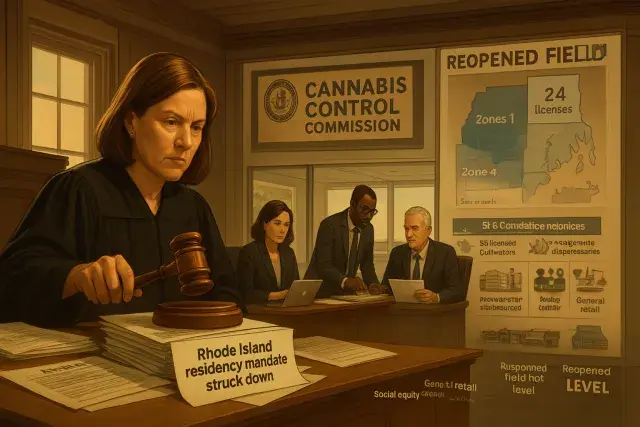
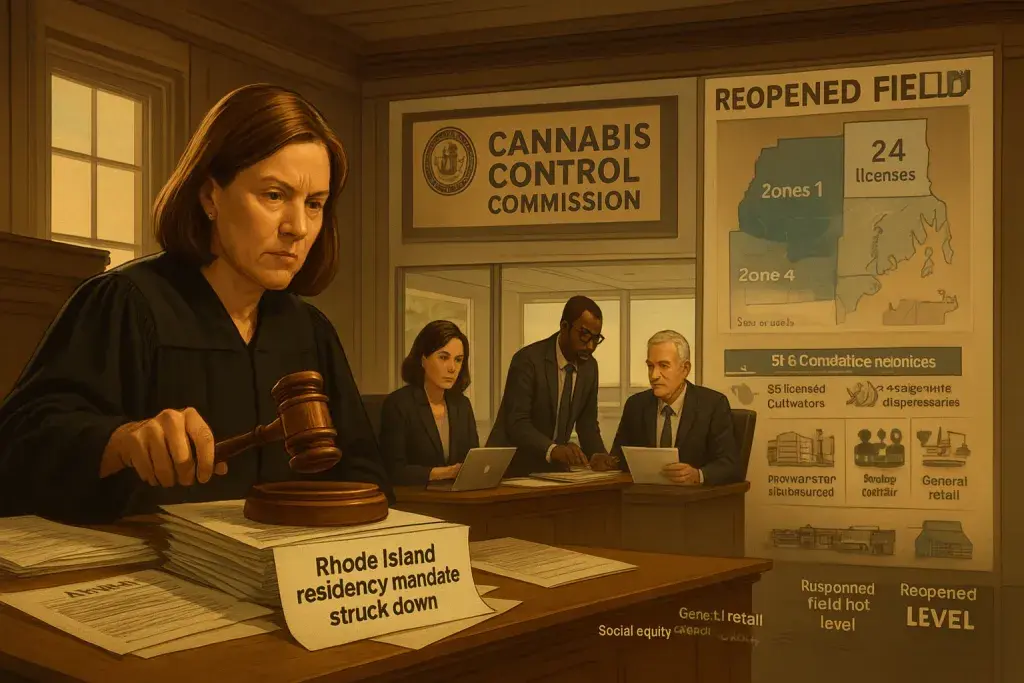
Rhode Island's retail cannabis licensing process is back on the calendar, months after a federal court case gutted the entire applicant pool and forced lawmakers to rewrite the underlying statute. Every application and every social equity certification submitted under the old rules got thrown out in April, after judges found the state's residency requirement - that at least one applicant live in Rhode Island - unconstitutional. That's not a small technical fix. It means operators who had spent years lining up real estate, financing, and zoning approvals were sent back to square one.
The mechanics of the restart matter as much as the ruling itself. Social equity certifications are due September 11, and general retail applications close November 23, giving operators a narrow window to assemble complete packages that include site control and proper zoning sign-off. For multi-state operators and single-license hopefuls alike, this is the point where back-office infrastructure decisions get made - inventory systems, compliance logging, and point-of-sale platforms need to be lined up well before a license is even awarded, since regulators expect operational readiness, not just paperwork. Operators studying how comparable markets structured retail buildout, including resources like cannabis pos new jersey, often find useful reference points for what a functioning compliance stack looks like at launch. cannabis pos new jersey
Why the Residency Rule Collapsed
The legal problem wasn't unique to Rhode Island. Federal courts in other states had already struck down similar residency mandates on constitutional grounds, and Judge Melissa DuBose didn't mince words about the Cannabis Control Commission's decision to proceed with licensing anyway despite that pattern. Her description of the fallout as "self-inflicted" is a pointed reminder that regulatory bodies carry real exposure when they move forward on legally shaky ground. The Commission, chaired by Kim Ahern until October, along with members Layi Oduyingbo and Robert Jacquard, now faces the task of standing up a new certification and application process within the 60-day window the General Assembly mandated - while also stripping out the implicit residency preferences embedded elsewhere in the social equity framework.
A Reopened Field, Not a Level One
Here's the catch with restarting from scratch: it isn't actually fair to the operators who've been carrying lease payments and holding real estate for years on the hope of winning a lottery slot. New applicants can now enter the field without that sunk cost, competing for the same 24 licenses spread across six zones. The prior lottery, now void, was only going to award 20 of those, since Zone 1 in the north and Zone 4 - covering East Greenwich, North Kingstown, Cranston, and Warwick - didn't draw enough applicants. License types remain split among social equity, worker cooperative, and general retail categories, and awards will again run through a lottery for applicants who clear the bar on zoning and site control.
Pressure Building on Both Ends of the Supply Chain
The delay isn't cost-free for anyone in the vertical. Before the April derailment, the Commission was actually weighing whether to slow licensing further, worried that adding dispensaries too quickly would trigger price compression among the state's nine existing stores. Meanwhile, cultivators are squeezed from the other direction. Rhode Island now has 55 licensed cultivators, down from 58 earlier this year, while six of the nine operating dispensaries are partially or fully vertically integrated - meaning they grow much of their own product and need less wholesale supply. The cultivator decline reflects OP Pharm's merger into the vertically integrated New Leaf Compassion Center and Blackstone Valley Group's decision not to renew its license. For wholesalers already stretched thin, every month the retail pipeline stays clogged is a month with fewer buyers on the wholesale menu.