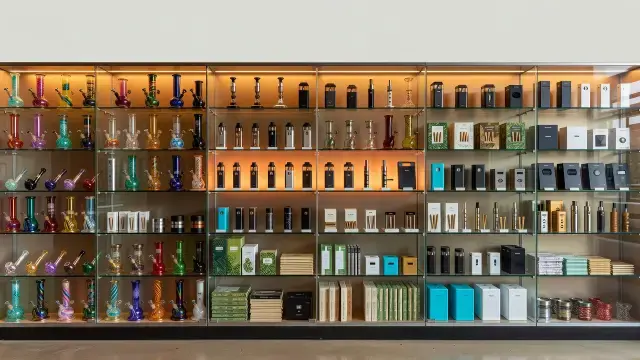
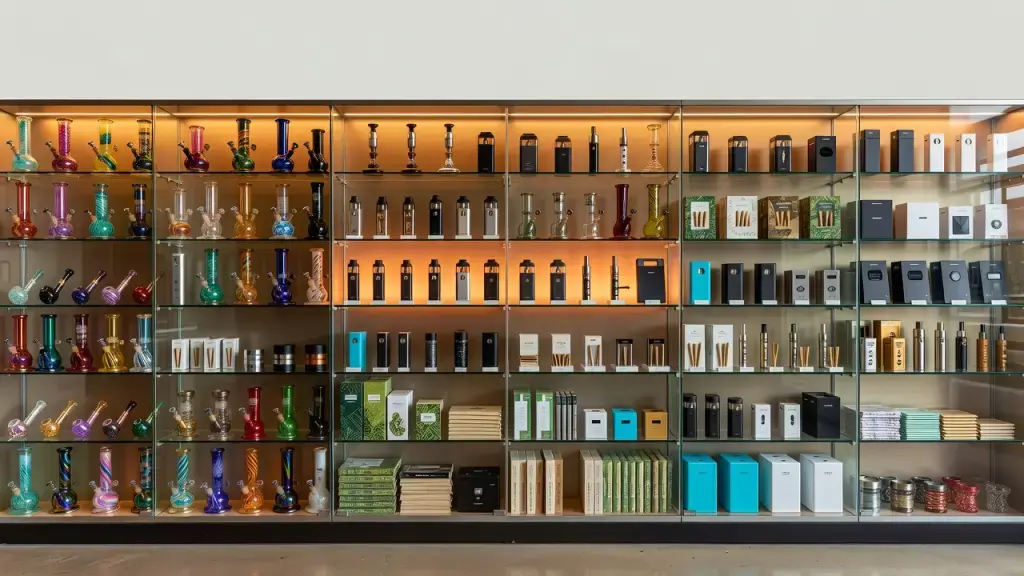
Flower prices keep sliding as cultivation capacity outpaces demand in most mature markets, and that commoditization is pushing dispensary operators to find margin somewhere else. The accessory case - grinders, pipes, batteries, rolling papers, concentrate devices - is becoming that somewhere else. The retailers figuring this out fastest are the ones starting to look less like a cannabis counter and more like a traditional smoke shop.
Commodity products still carry the store
Basic accessories move because they solve an obvious problem at a price nobody has to think twice about. A 50-millimeter grinder, a pack of cones, a handful of inexpensive glass pipes - these are impulse-adjacent purchases that sit near the register or on an end cap and sell themselves. For a budtender working a line of customers during a Friday rush, that matters. There's no time for a sales pitch on a $9 item.
The mistake is treating "value" and "cheap" as the same thing. They are not. Glass, in particular, spans an enormous range - from five-dollar hand pipes to collector pieces running into the thousands - while maintaining relatively strong margins across nearly the entire spectrum. Rolling papers, by contrast, sell reliably but typically carry thinner margins. Inventory managers need to separate volume drivers from margin drivers, because stocking decisions based on turnover alone will miss where the actual profit sits.
Why premium electronics break the rule
Here's the catch: durable accessories are supposed to be a one-time purchase. A consumer buys a concentrate vaporizer and, in theory, uses it for a year or more before replacing it. Puffco has disrupted that cycle by building a brand around limited-edition releases and a recognizable community presence, including its annual fan event. The result is repeat purchasing behavior on a product category that normally wouldn't generate it.
That is a brand-loyalty story, not a price story. Retailers shouldn't read it as evidence that premium accessories sell themselves at any price point. Most brands cannot generate that kind of demand simply by releasing a new colorway and adding to the sticker price. For every dispensary chasing the next high-ticket device, the inventory risk is real: a $150 unit sitting untouched for months ties up working capital that a disciplined operator can't easily recover, particularly under 280E, where deductions on non-plant-touching inventory still face scrutiny depending on how the business is structured.
Building an assortment with intention
The right accessory program is not about maximizing SKU count. It's about matching each product to a job: driving foot traffic, completing a basket, or generating margin. A disciplined merchandising approach means tracking sell-through data by SKU, not guessing based on what looks appealing on a wholesale menu.
- Core commodity items (grinders, cones, batteries, basic glass) should be replenished consistently and never out of stock.
- Mid-tier glass should be selected for margin performance, not just price point variety.
- Premium electronics should earn shelf space through demonstrated demand, not novelty alone.
- Age verification, compliant packaging and POS controls apply to accessories sold alongside cannabis products just as rigorously as to flower and concentrates.
In practice, though, this requires the kind of inventory discipline many dispensaries still don't have - point-of-sale systems that actually flag slow movers, and buyers willing to cut a product line even when a brand rep is pushing hard for shelf space.
The smoke shop comparison, taken seriously
Dispensaries already have something smoke shops spend years building: a customer base that trusts them and returns regularly. What they haven't always done is treat the accessory wall with the same seriousness as the budroom. As cannabis itself becomes harder to differentiate on price or potency alone, the stores that win on basket size will be the ones that understand exactly why a $5 pipe and a $120 device both belong on the same shelf - and can explain, in inventory terms, what each one is there to do.