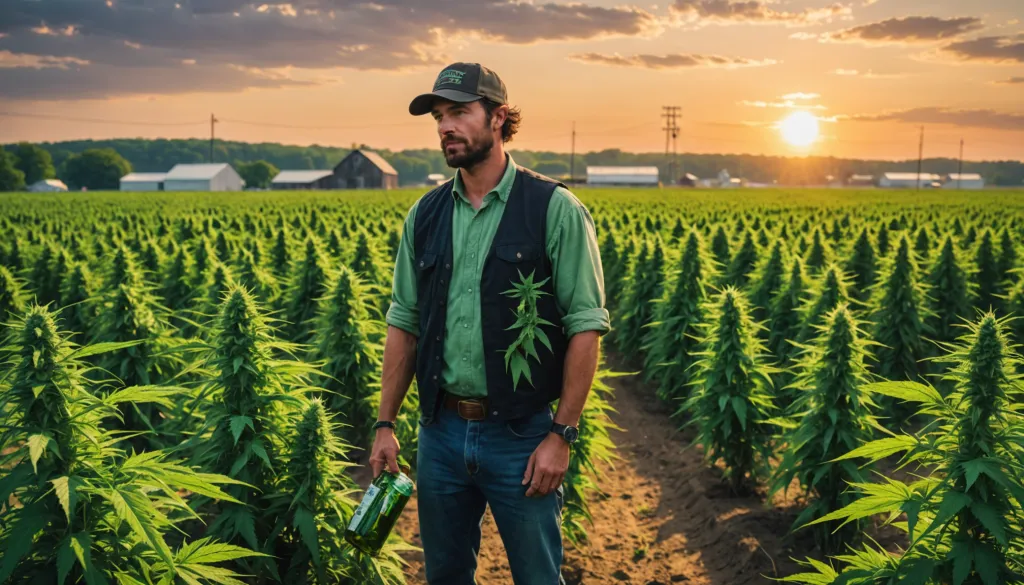
A Lancaster County hemp farmer and retailer is warning that a pending federal deadline could upend a Pennsylvania industry generating an estimated billion dollars a year. Congress recently closed a loophole that had allowed hemp-derived products containing Delta-9 THC to circulate largely outside the regulatory structure that governs adult-use and medical cannabis, and lawmakers now face a December deadline to decide whether to tighten restrictions or ban certain hemp products outright.
Jake Sitler, founder of the hemp brand Endo and president of the Pennsylvania Hemp and Cannabis Guild, sells beverages, gummies and topicals built around CBD but containing Delta-9 THC and other minor cannabinoids. That distinction matters more than it sounds. Hemp-derived products have operated under a different compliance framework than licensed cannabis dispensaries since the 2018 Farm Bill, one with lighter testing mandates, no state license caps, and none of the seed-to-sale tracking that operators in regulated markets take for granted. Dispensaries in states with mature adult-use programs already run on infrastructure built for exactly this kind of oversight - inventory logs, batch-level lab testing, age-gated point-of-sale systems - the sort of backend discipline that platforms like cannabis software for dispensaries massachusetts were built to manage. Hemp retailers, by contrast, have largely built their own patchwork of compliance.
Why regulators call it the wild west
Pennsylvania Attorney General Dave Sunday has framed his concern plainly: hemp companies can manufacture intoxicating products without the same regulatory scaffolding that licensed cannabis operators must follow. No mandatory child-resistant packaging standard applies uniformly. No statewide seed-to-sale system tracks batches from farm to shelf. Age verification, where it exists, is often a store policy rather than a legal requirement enforced through licensing. That gap is precisely what has drawn attention from lawmakers worried about youth access to intoxicating hemp beverages and edibles sold in gas stations, smoke shops, and general retail - outlets that never had to clear the licensing bar dispensaries did.
Sitler says he already posts 21-and-over signage and supports regulation, arguing that the bad actors in hemp retail have damaged the reputation of operators trying to run compliant, transparent businesses. That's a familiar tension in regulated cannabis markets generally: a subset of unlicensed or loosely regulated sellers creates enforcement headaches that fall hardest on operators trying to do things by the book.
What a federal ban would mean for the supply chain
A blanket ban wouldn't just close retail shelves. It would ripple back through Pennsylvania's hemp farmers, processors, and wholesale distributors who built crop plans and production lines around a legal Delta-9 hemp market. Sitler's core argument to lawmakers is a compromise: draft rules that address youth access and product safety without dismantling the agricultural side of the business. That's not an unreasonable ask on paper, but reconciling federal hemp policy with the state-by-state cannabis licensing structure already in place is not simple. Regulators are effectively being asked to decide whether hemp-derived THC products should be folded into existing cannabis compliance frameworks - testing, tracking, licensing - or eliminated from commerce altogether.
- Federal deadline in December to act on hemp-derived THC restrictions
- No uniform statewide seed-to-sale tracking currently required for hemp products in Pennsylvania
- Age-verification and packaging standards vary by retailer rather than by law
- Farmers and processors face direct exposure if federal rules narrow or ban Delta-9 hemp products
The stakes for operators watching from the sidelines
For licensed dispensary operators in adult-use and medical markets, the hemp fight is worth watching closely, even if it's technically a separate regulatory lane. A federal decision to bring hemp-derived THC products under stricter oversight could push some of that consumer demand toward licensed retail channels that already carry the compliance infrastructure regulators want. Conversely, a soft-touch outcome leaves licensed operators competing against products sold with far lower overhead, no excise tax burden comparable to what state-licensed cannabis businesses absorb, and none of the 280E tax exposure that squeezes plant-touching cannabis companies. Either way, the outcome in Washington will shape how Pennsylvania's cannabis and hemp markets sit next to each other for years to come.