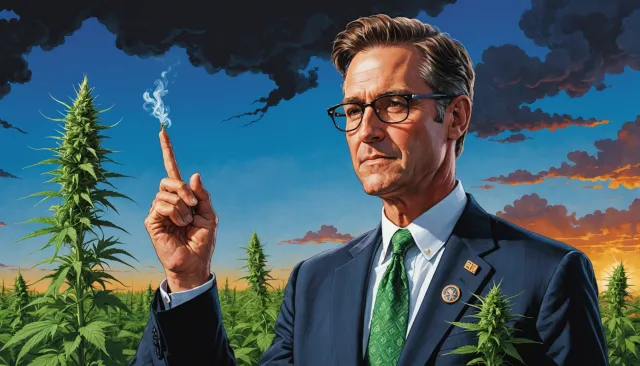
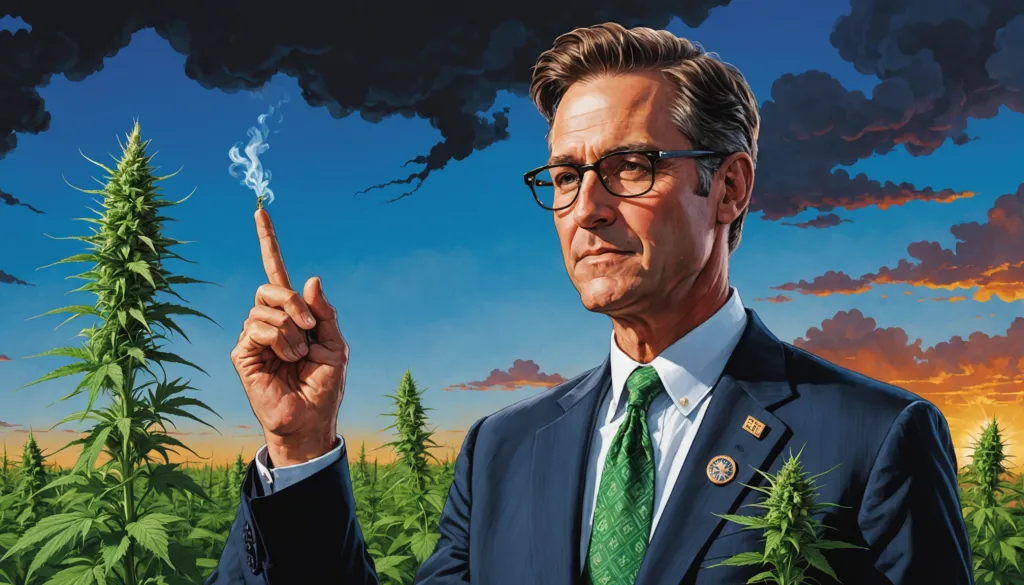
Attorney General Gentner Drummond wants Oklahoma Republicans to hand him the governor's office on Tuesday. He is also chairman of the parent company of Blue Sky Bank, an institution that has grown more than sixfold since medical marijuana became legal in the state, from roughly $200 million in assets in 2018 to more than $1.3 billion today. That growth curve, and who sits atop it, deserves scrutiny that goes beyond a campaign talking point.
None of this required a leak. It's sitting in FDIC filings and on the bank's own leadership page. Blue Sky Bank markets itself as a coast-to-coast cannabis banking operation, running a "Canna-Direct" account for growers, processors, dispensary owners, transporters, waste disposal operators and labs, plus armored cash pickup for an industry still largely locked out of ordinary banking under federal law. That last part is not decorative. Marijuana remains federally illegal to bank in the plain sense, which is why so much of the industry's infrastructure, from seed-to-sale tracking through METRC to point-of-sale systems built for compliant retail, exists specifically to create the paper trail traditional banks demand before they'll touch cannabis money. Operators in states like Alaska have leaned on purpose-built systems, such as compliant cannabis POS in Alaska, precisely because generic retail software doesn't satisfy the reporting standards regulators and banks expect. Blue Sky's growth suggests it found a way around that hesitation on a much larger scale. compliant cannabis POS in Alaska
Why Cannabis Cash Still Creates Banking Risk
Here's the mechanism worth understanding. Federal law keeps most banks from touching cannabis deposits because marijuana remains a Schedule I substance, which means any institution accepting that cash risks running afoul of anti-money-laundering rules built for a pre-legalization world. Banks that do serve the industry, like Blue Sky, absorb extra compliance costs: enhanced due diligence, currency transaction reports, suspicious activity monitoring. Structuring, breaking large cash deposits into smaller amounts specifically to avoid federal reporting thresholds, is a felony, and it's the exact pattern described by anonymous sources cited in reporting on Blue Sky's growth. Nobody has produced a truck, a route, or a documented deposit. That's precisely why an independent audit matters. Vague claims don't prove wrongdoing, but a bank chaired by a sitting attorney general running for governor doesn't get to lean on "trust me" when the paperwork to settle the question sits in its own vault.
The 280E Angle Nobody's Talking About
There's a policy wrinkle here that changes the financial stakes considerably. If federal rescheduling from Schedule I to Schedule III moves forward as reported, state-licensed cannabis operators would stop absorbing the Section 280E tax penalty that currently forces them to pay income tax on gross revenue rather than net profit. That's real money flowing into an industry Blue Sky Bank has spent years building its cannabis-deposit base around. A governor's office sets tone on cannabis policy enforcement, licensing posture, and compliance priorities. A candidate whose personal bank stands to gain from favorable federal treatment of that same industry owes voters a direct answer about how he'd separate his portfolio from his policy.
What Operators and Regulators Should Take From This
For dispensary owners and multi-state operators watching from outside Oklahoma, the takeaway isn't about one candidate. It's a reminder that cannabis banking relationships, wholesale cash handling, and compliance logs are exactly the kind of records that become political liabilities when transparency is optional rather than required. Operators who keep clean COAs, audited books, and verifiable manifests aren't just meeting regulatory minimums; they're building a record that survives public scrutiny. Drummond's opponent has already called for Blue Sky's books to be opened. That's a reasonable ask, days before a runoff, for an office that decides who gets prosecuted as a "bad guy" in an industry the chairman's own bank profits from banking.