Illinois dispensaries are moving more marijuana products than ever, yet the dollars flowing through the till are shrinking - a split that state regulators say reflects better consumer pricing rather than a weakening market. That's the central finding of a 160-page fiscal year 2026 report jointly released by the Illinois Department of Financial and Professional Regulation and the Cannabis Regulation Oversight Office, covering sales, tax revenue, licensing and compliance activity across the state's adult-use and medical programs.
Volume Up, Revenue Down - Here's the Catch
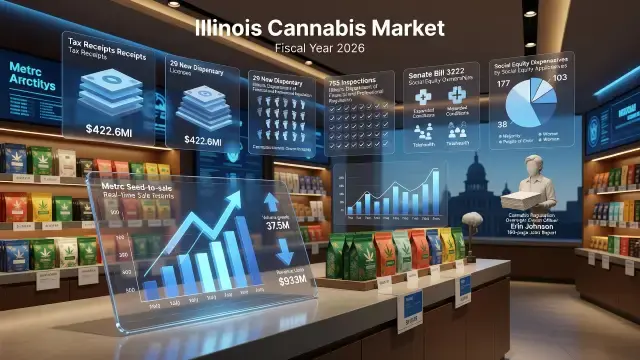
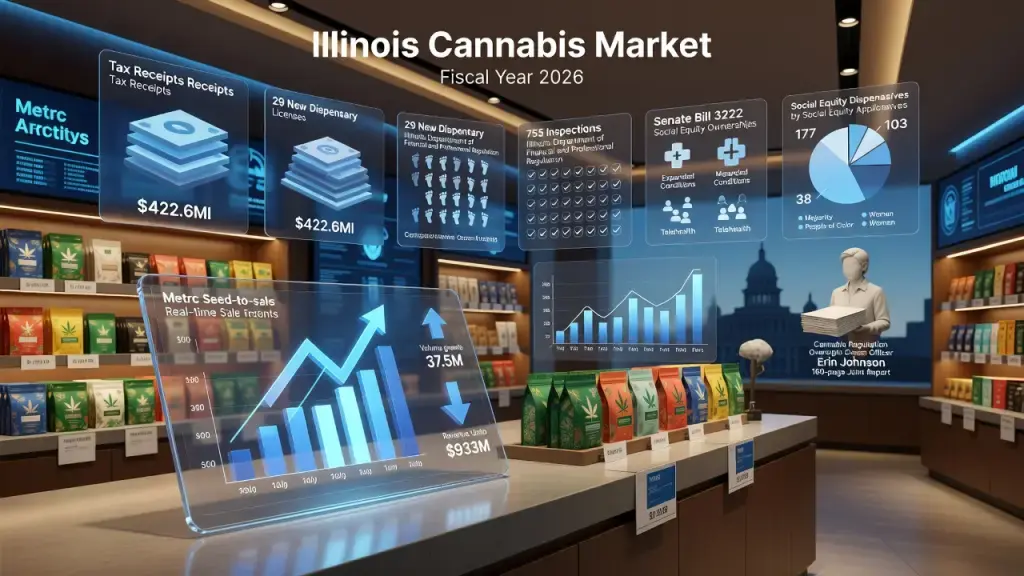
Dispensaries sold roughly 37.5 million recreational products in the first eight months of 2026, up 10.1% year over year, with July setting a record at 5.07 million units. Adult-use sales dollars, though, fell to about $933 million from January through August, down from $1.06 billion a year earlier. On paper that looks like a shrinking market. In practice, it's something closer to the opposite.
State officials attribute much of the gap to a reporting change tied to the 2025 migration to the Metrc seed-to-sale tracking system. The prior system sometimes logged pre-discount list prices; Metrc captures what customers actually pay at the register, promotions and discounts included. For operators, that distinction matters - it means wholesale pricing pressure and retail discounting are finally showing up accurately in state figures, rather than being masked by sticker prices nobody actually paid. Officials were clear that the change affected reporting only, not tax collections.
Tax Receipts Soften Even as Store Count Grows
Fiscal year 2026 combined medical and recreational sales totaled $1.52 billion, down from $1.96 billion in fiscal year 2025. Dispensary tax revenue came in at $422.6 million, a 3.6% decline from $438.2 million the prior year. For a state budget office, that's a number worth watching. For operators, it's a reminder that excise tax lines are sensitive to average selling price, not just unit volume - a store can sell more product and still generate a smaller tax bill if per-unit prices keep falling.
Meanwhile the retail footprint kept expanding. Regulators issued 29 new operational dispensary licenses in fiscal year 2026, pushing total retail locations up more than 10%, and the state has now more than doubled its dispensary count over three years. More stores chasing a flatter revenue pool typically means tighter margins per location - a dynamic worth flagging for anyone underwriting a lease, a loan or a wholesale supply contract in this market.
Compliance Oversight Scaled Up Alongside the Market
The Department of Financial and Professional Regulation conducted 755 dispensary inspections in fiscal year 2026, up from 625, while growing its inspection staff from 11 to 16. No mandatory product recalls were issued during the period - a clean compliance record worth noting, though not a guarantee against future action as inspection capacity continues to build.
Senate Bill 3222, signed in June, adds operational complexity worth tracking:
- Recreational dispensaries may seek authorization to serve medical patients
- Qualifying medical conditions have been expanded
- Certain medical certification fees are reduced
- Telehealth patient certifications now carry added protections
- The Illinois Department of Agriculture will open applications for 45 new infuser licenses
Social equity metrics remain part of the licensing picture: 177 dispensary licenses are majority-owned by social equity applicants, 103 by people of color and 38 by women, with overlap among categories.
What Operators Should Watch in Fiscal Year 2027
Regulators plan updated medical and recreational rules, licensing-system improvements and a new patient portal giving medical cardholders access to purchase histories. Cannabis Regulation Oversight Officer Erin Johnson framed the year as one of maturing infrastructure and record sales at better prices for consumers. Fair enough - but for dispensary owners and wholesalers, the real signal is margin compression. Rising unit sales paired with falling revenue per transaction means tighter inventory management, sharper wholesale negotiation and closer attention to 280E tax exposure will matter more in the year ahead than top-line volume alone.