
Steve Hilton, the Republican gubernatorial candidate endorsed by President Donald Trump, said California's cannabis taxes and regulations are "too high" - and that the licensed industry is losing ground to the illicit market as a direct result. Speaking at a Sacramento event, Hilton told reporters he has spent time with industry stakeholders and is actively working through the specific regulatory and tax changes needed to make the licensed market viable. With a general election race shaping up against Democrat Xavier Becerra, California's cannabis policy is now, unmistakably, a front-line political issue.
The Tax and Compliance Burden That's Choking Licensed Operators
For dispensary owners and multi-state operators who've watched their compliance costs climb while illicit competitors undercut them on price, Hilton's framing will sound familiar. California stacks excise taxes, cultivation taxes, local sales taxes, and city-level fees in ways that can push the total tax burden on a single consumer transaction well above what most other adult-use states impose. The result is a price gap between licensed and unlicensed product that isn't a quirk - it's structural. Operators managing seed-to-sale tracking requirements, METRC compliance, compliant packaging mandates, lab-testing costs, and COA documentation on every batch have little room to absorb that gap. Regulated retailers in other high-tax states face similar pressure; those tracking tools and compliance protocols used in states like Alaska - where operators rely on dedicated cannabis point of sale alaska systems to manage reporting obligations - illustrate how technology can reduce administrative friction, even when the underlying tax structure remains the industry's core problem.
The fundamental issue is that legalization, as implemented in California, optimized for revenue collection before it optimized for market competitiveness. When excise taxes and regulatory overhead make licensed product significantly more expensive than unlicensed product, consumers make a straightforward economic decision. Hilton is right that the illicit market has not shrunk since Proposition 64 took effect in 2016 - if anything, the combination of high taxes, high compliance costs, and uneven local licensing has left the licensed sector fighting for share in a market it was supposed to own.
280E Relief and Federal Rescheduling: The Other Half of the Equation
Hilton's state-level argument arrives at a moment when federal policy is also shifting in ways that matter to licensed cannabis businesses. The Trump Justice Department moved forward earlier this year with rescheduling medical cannabis authorized by states from Schedule I to Schedule III of the Controlled Substances Act - a step that was set in motion under the Biden HHS, when Becerra himself facilitated the scientific review process that produced the rescheduling recommendation. The politics of that overlap are worth noting: both candidates effectively have fingerprints on the same federal reform trajectory.
Here's what that means in operational terms. Under IRS code 280E, cannabis businesses classified as Schedule I or Schedule II controlled substance traffickers are barred from deducting ordinary business expenses - payroll, rent, POS systems, insurance, marketing - that any other retailer takes as standard deductions. A Schedule III designation would eliminate that restriction for businesses operating with state authorization. For a licensed dispensary running on thin margins after taxes and compliance costs, the ability to claim standard business deductions is not a minor accounting footnote. It is the difference between a financially sustainable retail operation and one that is effectively taxed on gross revenue rather than profit. Full rescheduling depends on administrative hearings that began this month, and the outcome is not certain.
One Party Agrees on Direction; The Details Are Still in Dispute
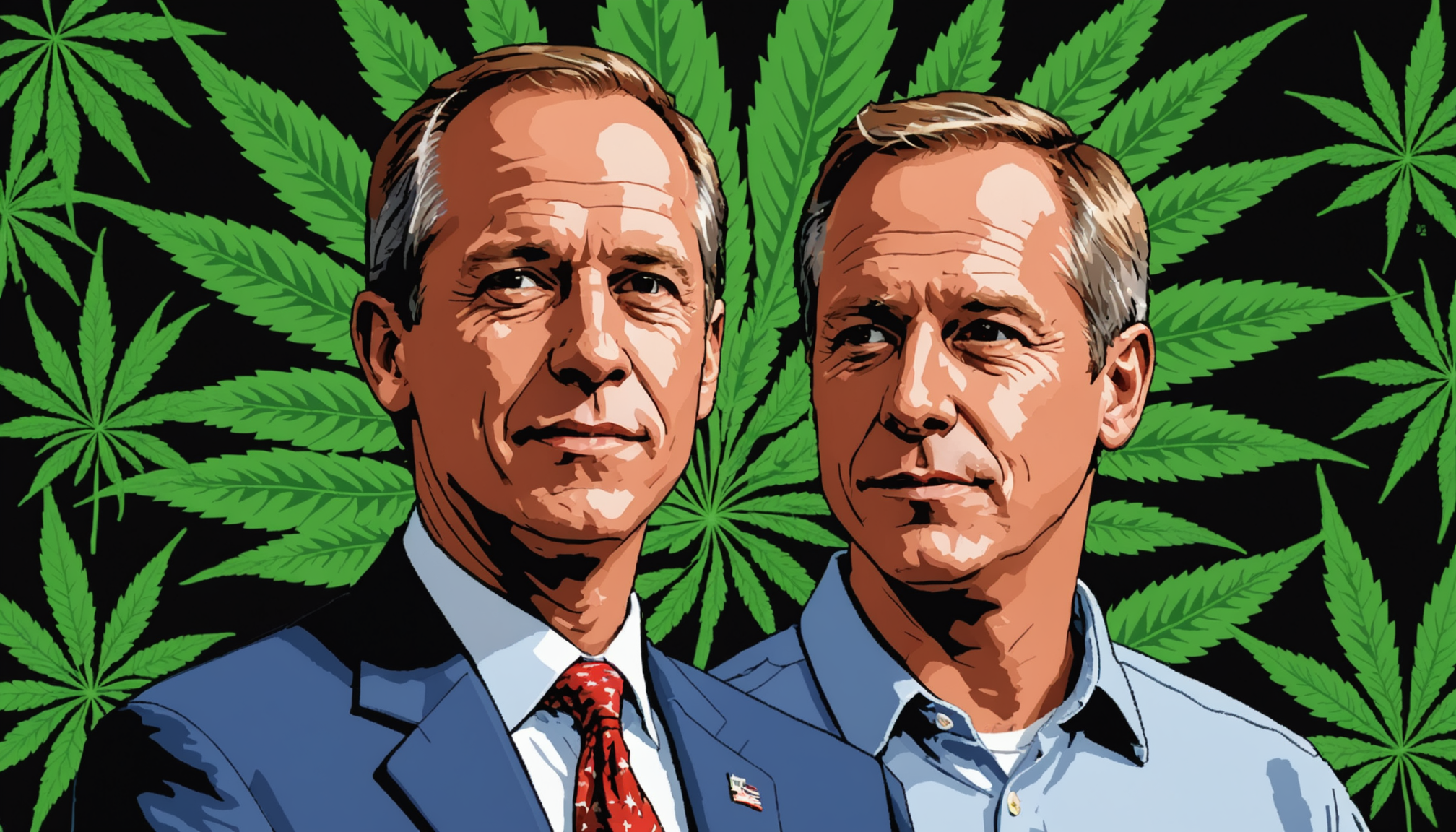
What's striking about the current California race is that both major candidates, a Trump Republican and a Biden-era Democrat, accept the basic premise that cannabis legalization was the right call. That kind of cross-partisan alignment on adult-use policy would have been unthinkable a decade ago. It doesn't mean the debate is over - there are still California Republican lawmakers who want to revisit Proposition 64 entirely, citing health concerns and arguing voters were misled. And Hilton's specific allegation that cannabis tax revenue earmarked for substance misuse treatment was diverted to political organizations remains unverified in this reporting; he offered no named recipients or documented figures.
For B2B operators - wholesale brands, technology vendors, real estate investors, payment processors - the practical signal here is less about Hilton's campaign rhetoric and more about the direction of travel. When both candidates in a major-state governor's race are competing on how to improve cannabis policy rather than whether to allow it, the question of whether the legal market survives long-term becomes a question of tax structure and regulatory design, not political will. Licensed operators who've built businesses around the current compliance framework should be watching Sacramento's budget and tax conversations closely - and talking to their trade associations now, before any ballot initiative or legislative package takes shape.