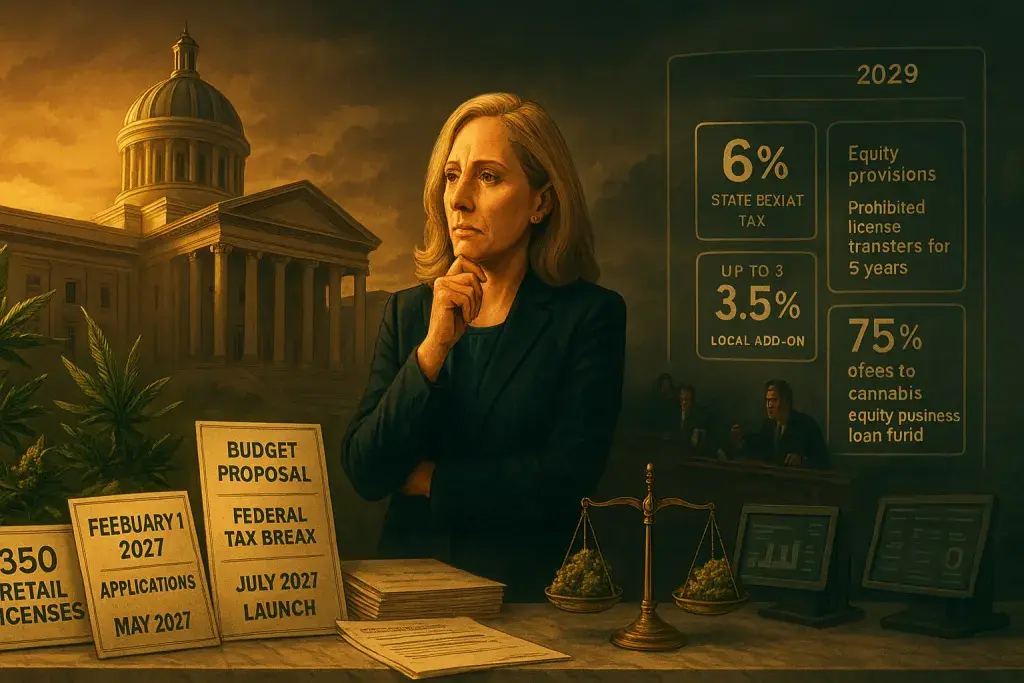
Virginia has a framework for recreational cannabis retail - on paper, at least. Governor Abigail Spanberger and the General Assembly have reached a compromise that would launch licensed adult-use sales on July 1, 2027, under budget language entered into the House of Delegates' proposal. The agreement resolves a months-long standoff over license caps, tax structure, and equity protections, but its survival depends entirely on a state budget that remains unsigned heading into a July 1 deadline.
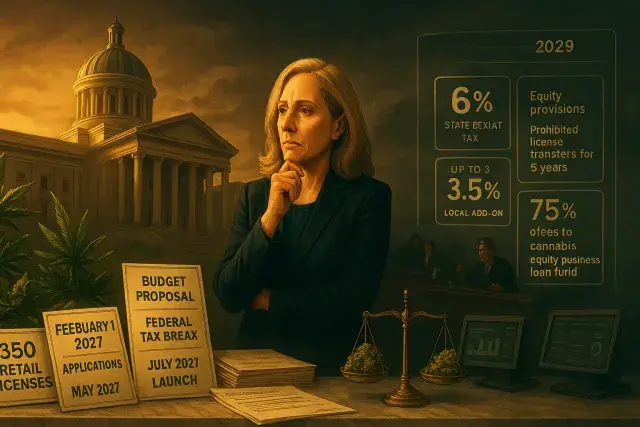
The deal sets 350 retail licenses - the figure lawmakers originally sought, rather than the 200 Spanberger had pushed for - though they won't be released all at once. The Cannabis Control Authority would open applications February 1, 2027, with up to 100 microbusiness licenses available beginning May 1 of that year. For operators and investors tracking emerging adult-use markets, the licensing structure echoes the phased rollout approaches seen elsewhere. States that have launched more deliberately - with staggered application windows and tiered license classes - have generally managed early supply imbalances better than those that flooded the market on day one. Vendors supporting new-market entry, from cannabis pos systems alaska to East Coast compliance platforms, know that the technology procurement cycle in a new state typically begins 12 to 18 months before first sale - meaning Virginia operators will need to be moving on point-of-sale, seed-to-sale tracking integration, and inventory management well before mid-2027.
Tax Structure Designed to Undercut the Illicit Market
The compromise opens with a 6% state excise tax on adult-use sales, which cannot be raised to 8% until July 1, 2029. Localities can add up to 3.5% on top of that. Sen. Lashrecse Aird, a Democratic co-sponsor, framed the low opening rate as "not just an economic decision" but "a public safety strategy" aimed at drawing consumers away from unregulated suppliers.
That framing reflects a debate playing out in regulated cannabis markets across the country. High combined tax burdens - state excise, local add-ons, and in some cases retail sales tax - have kept illicit market operators price-competitive in states that launched with aggressive rate structures. Virginia's phased approach attempts to avoid that trap, at least initially. Whether a 6% rate is low enough to move price-sensitive consumers from gray-market sources is a question the market will answer, but the logic is sound. The 2029 rate ceiling also gives the industry time to build volume before the tax burden increases - a runway that early-stage operators and wholesale suppliers will want to factor into multi-year financial models.
Equity Provisions and Anti-Consolidation Language Draw Attention
The deal's equity provisions are more specific than what many compromise agreements produce. Del. Paul Krizek, the House's Democratic co-sponsor, says the legislation prohibits license sales within the first five years and limits transfers and ownership changes - language he described as designed to prevent larger entities from using equity or impact licensing structures as a back door for market consolidation. Seventy-five percent of all license fee deposits in the first year would flow to a state cannabis equity business loan fund.
Here's the business reality: social equity licensing programs in other states have repeatedly been undermined by management service agreements, silent equity arrangements, and debt structures that effectively transferred economic control of licensed businesses to well-capitalized outside firms while leaving the nominal licensee exposed to regulatory liability. Virginia's anti-transfer language is an attempt to close that gap. Whether the Cannabis Control Authority has the enforcement capacity to police ownership structures in practice is a separate question - and one that compliance professionals and equity advocates will be watching closely once the regulatory framework is fully written. Marijuana Justice Executive Director Chelsea Higgs Wise called the compromise "a meaningful step forward" while signaling that her organization would be monitoring whether the framework advances equity in execution, not just in statute.
Budget Uncertainty Is the Variable No One Can Price
All of this exists inside a budget that hasn't been signed. The cannabis provisions are embedded in the House's budget proposal, not a standalone bill - and the broader budget is caught in a dispute between Spanberger, House Speaker Don Scott, and Senate Finance Chair Louise Lucas over data center tax breaks. Greg Habeeb, former delegate and president of Gentry Locke Consulting, who lobbies for the Virginia Cannabis Association, put it plainly: "Just because they have, at least, philosophical agreement on the cannabis part of it doesn't mean anything if the whole budget's not agreed to." He noted that a standalone bill would have been a cleaner path.
For the operators and investors who have been watching Virginia through multiple failed legislative attempts, this is the part that stings. Tanner Johnson, CEO of Elkton-based Pure Shenandoah, said Spanberger's May veto already cooled investor interest. "All these false starts are not good for investors, that's for sure. They start looking at other places they can put money instead." That's a real operational consequence - capital that might fund buildout, inventory, and compliance infrastructure in Virginia gets redirected to markets with more regulatory certainty. Real estate commitments, vendor contracts, and staffing plans all wait on a signed budget. The Joint Commission on Cannabis Transition will still work through regulatory specifics over the coming year, which means even if the budget passes, the compliance rulebook won't be final for some time.
Virginia has the architecture of a functioning adult-use market. What it doesn't have yet is the certainty that the building goes up.