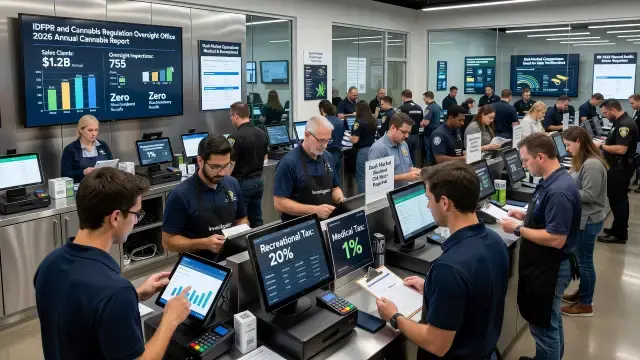
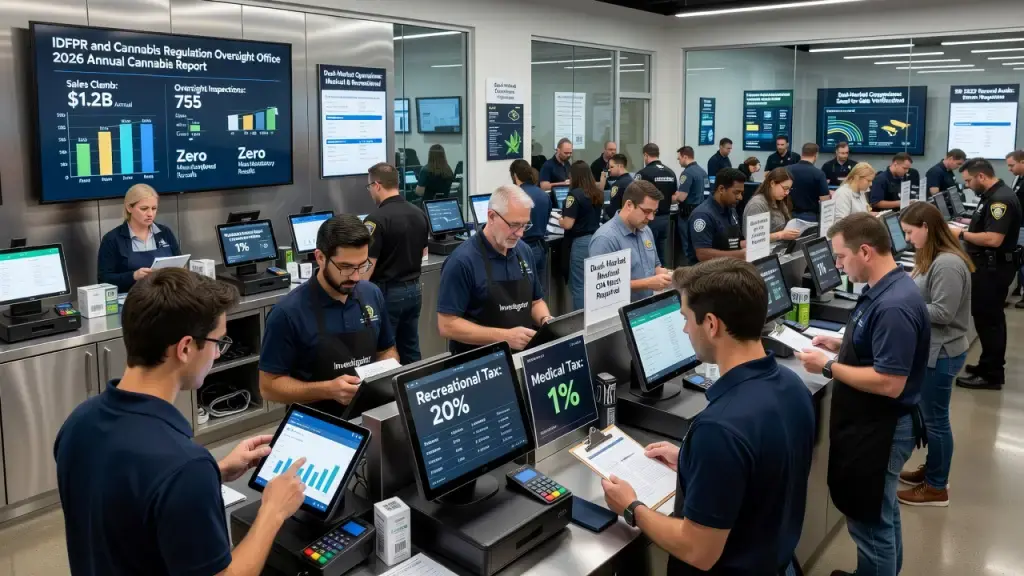
Illinois regulators just closed the books on a fiscal year that reshaped how the state's cannabis industry operates. The 2026 Annual Cannabis Report, released jointly by IDFPR and the Cannabis Regulation Oversight Office, shows an industry expanding its footprint while the state simultaneously rewrites the rulebook governing who can sell, how they're licensed, and who gets access to medical product. For operators, the headline isn't just growth. It's the arrival of SB 3222, a law that touches nearly every corner of dispensary operations.
SB 3222 Resets the Regulatory Baseline
Signed in June 2026, the Cannabis and Hemp Omnibus is being described by state officials as the most consequential update to Illinois cannabis law since the original Cannabis Regulation and Tax Act. The mechanics matter here. Adult-use dispensaries can now opt in to serve medical patients directly, collapsing a structural divide that previously forced patients into a smaller pool of designated medical locations. That's a real operational shift - point-of-sale systems, inventory tracking, and staff training all have to account for dual-market transactions, different tax treatment, and separate compliance logs for medical versus adult-use sales.
The law also leans into what regulators call right-touch regulation: trimming entry barriers for dispensary workers, increasing transparency around business ownership, and reducing some compliance friction that smaller operators have long flagged as disproportionately burdensome. In practice, though, lighter-touch rules on one side of the ledger tend to come with sharper enforcement elsewhere - which is exactly what the inspection numbers suggest.
More Inspections, More Investigators, No Recalls
IDFPR conducted 755 dispensary inspections in FY26, up from 625 the prior year, while growing its inspection staff from 11 to 16. The Cannabis Control Section also added eight investigators to keep pace with new store openings. That's not incidental - as license counts rise, so does the surface area regulators have to cover, from compliant packaging checks to verifying seed-to-sale tracking accuracy against METRC records.
The report notes no mandatory product recalls occurred in FY26. That's worth sitting with for a moment: it suggests the state's testing and compliance infrastructure held up even as transaction volume hit record levels. For operators, it's a reminder that lab testing, batch tracking, and COA documentation aren't paperwork exercises - they're the mechanism that keeps a fast-growing retail market from generating a public safety incident.
- 29 new operational dispensary licenses issued in FY26, a more than 10 percent increase in retail locations
- Dispensary inspections rose from 625 to 755 year over year
- Inspection staff expanded from 11 to 16 investigators
- Zero mandatory cannabis product recalls reported in FY26
Sales Volume and What It Means for Pricing
July 2026 saw more than 5 million adult-use items sold, the highest monthly total on record for the state. August followed with nearly 4.9 million items, a 9 percent increase over August 2025. Volume climbing alongside what regulators describe as the lowest consumer prices yet points to a market maturing in a familiar way: more cultivators and processors competing for shelf space, wholesale menus compressing, and retailers adjusting SKU management to stay competitive on margin rather than sticker price alone.
That dynamic puts pressure on smaller operators who don't have the purchasing leverage of vertically integrated players. Lower wholesale pricing is good for consumers and good for topline sales, but it tightens margins for retailers still carrying the tax burden that comes with federal 280E treatment and state excise obligations.
Medical Access Gets Broader, Not Just Bigger
Before SB 3222, medical patients were largely confined to a limited set of designated medical dispensaries. The new law expands qualifying conditions, lowers certification fees, and codifies telehealth certification visits - removing friction points that had kept patient counts artificially constrained relative to demand. IDFPR is still processing dispensary applications tied to the opt-in medical provision, meaning the full retail footprint for medical access will keep shifting over the coming months rather than landing all at once.
For operators weighing whether to add medical service, the calculus involves more than compliance paperwork. It means separate inventory handling, patient verification protocols, and staff trained to navigate two regulatory tracks under one roof. Not every dispensary will find that worth the operational lift - but for those in underserved areas, it could meaningfully widen their customer base.