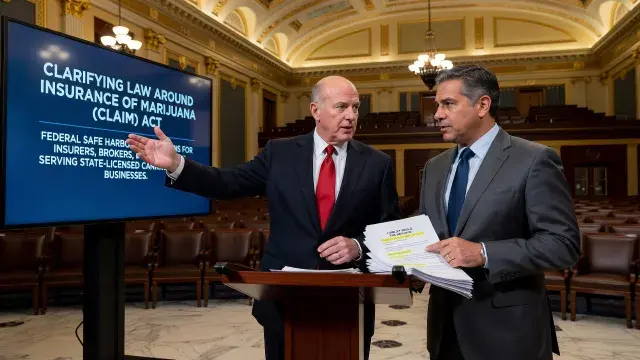
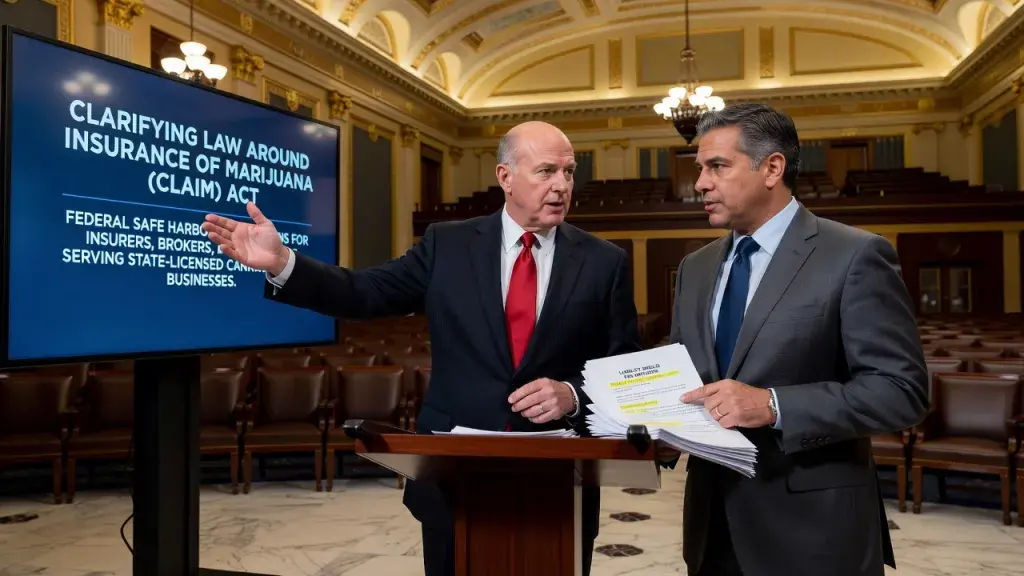
A bipartisan pair of senators has once again put forward legislation meant to solve a problem that quietly undermines cannabis retail operations nationwide: the inability of licensed operators to secure basic commercial insurance. Sens. Kevin Cramer (R-ND) and Ruben Gallego (D-AZ) introduced the Clarifying Law Around Insurance of Marijuana (CLAIM) Act this week, aiming to give insurers, brokers and agents a federal safe harbor when they write policies for state-licensed marijuana businesses. This marks the fourth consecutive Congress in which some version of this bill has been filed, and the underlying text hasn't changed much - which tells you something about how stubborn the underlying problem remains.
Here's the mechanism at issue: because cannabis remains federally illegal under Schedule I, insurance carriers that work with plant-touching businesses face theoretical exposure to federal penalties, even in states where marijuana sales are fully licensed and regulated. That risk pushes many national carriers out of the market entirely, leaving dispensaries, cultivators and processors to rely on a thin bench of specialty insurers - often at higher premiums and with narrower coverage terms. For a retail operator running budroom inventory, POS terminals, and a compliance-heavy back office, the absence of standard property, casualty, or title coverage isn't an abstract policy gripe; it's an operational vulnerability that touches everything from lease negotiations to lender conversations. Operators managing multi-state footprints know this pain well, and many have had to piece together risk management the same way they've had to piece together point-of-sale infrastructure - state by state, sometimes through niche platforms like cbd shop point of sale software minnesota vendors who understand localized compliance quirks that national providers tend to ignore.
What the Bill Actually Does
The CLAIM Act would bar federal regulators from penalizing insurance providers simply for covering state-licensed cannabis businesses. It would also stop insurers from being pressured to cancel or restrict policies for marijuana companies or ancillary businesses - the consultants, security firms, and logistics providers that serve the industry without touching the plant directly. Employees of insurance companies would get explicit liability protection too, addressing a quieter but real concern: individual underwriters and agents worried about personal exposure for doing their jobs.
The bill also requires a Government Accountability Office study on barriers facing minority-owned and women-owned cannabis businesses, particularly around licensing access and financial services. That's a meaningful addition. Social equity licensees already contend with higher capital costs and thinner margins under 280E tax treatment; insurance gaps compound that disadvantage, since lenders frequently require proof of coverage before extending financing.
Why Insurance Access Matters for Retail Operations
Dispensary owners tend to focus compliance energy on seed-to-sale tracking, METRC reporting, and lab-tested COAs for every product batch - and rightly so, since those systems protect consumers and keep licenses intact. But insurance sits underneath all of it. Without adequate coverage, a single fire, theft, or liability claim can wipe out a small operator, and inventory shrinkage becomes a far more expensive problem when there's no policy to absorb the loss. Landlords also factor insurance availability into lease terms for cannabis tenants, so thin coverage options can quietly restrict where dispensaries are even allowed to open.
Context: A Broader Legislative Push
The CLAIM Act arrives alongside a related banking safe harbor bill filed last month and amid the Trump administration's ongoing process to reschedule marijuana to Schedule III. Testimony in the DEA rescheduling hearing wrapped up recently, with final briefs due by mid-August before a judge issues a recommendation. Separately, Sen. John Fetterman (D-PA) has pushed a full legalization bill this month. None of these measures move in lockstep, and none guarantee passage - prior CLAIM Act versions stalled in three previous Congresses. Still, the repeated filings signal that federal lawmakers, across party lines, increasingly view insurance and banking access as basic infrastructure gaps rather than fringe industry complaints.