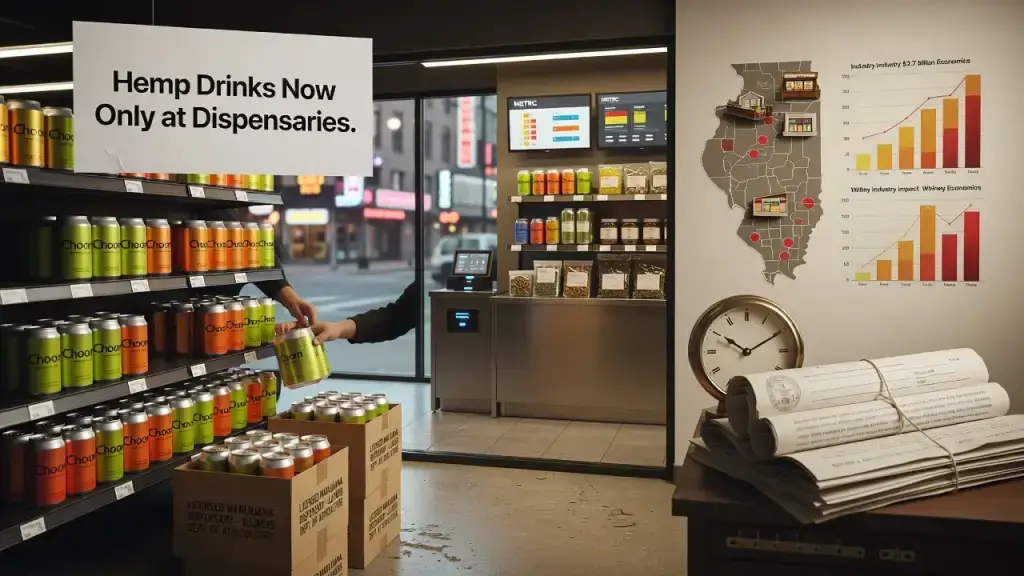
Illinois' new Hemp Act takes effect Thursday, cutting off the sale of hemp-derived THC beverages above 0.4mg per serving at bars, breweries, restaurants and retail stores statewide. From here forward, those products are supposed to move exclusively through licensed marijuana dispensaries, which operate under a far stricter compliance regime than the convenience store or taproom shelf they're leaving behind.
Why Regulators Drew This Line
The policy logic is straightforward, even if the fallout isn't. Hemp beverages sold outside the dispensary channel have operated with little to no age verification, no mandated lab testing protocol tied to state oversight, and inconsistent labeling. State Rep. Will Guzzardi, a sponsor of the act, has pointed to incoming federal rules that will classify these hemp-derived products as cannabis starting next month - a reclassification that leaves Illinois little room to keep them on general retail shelves. James Swartz, a professor at UIC's Jane Addams College of Social Work, framed the core issue plainly: minors could walk into a shop and buy an intoxicating beverage off an open cooler, something that would never pass muster at a licensed dispensary with ID checks and seed-to-sale tracking built into every transaction.
What Changes Operationally
For dispensary operators, this is a genuine supply chain shift. Products that once lived outside the regulated market now need to fit into existing POS systems, METRC reporting, compliant packaging standards and dispensary wholesale menus. That's not a small lift - budroom inventory planning, SKU management, and lab testing via COA documentation all have to accommodate a new beverage category competing for shelf space against edibles, flower and concentrates. For the hemp-beverage brands themselves, the math is brutal: losing access to bars, breweries and convenience stores means losing the broad retail footprint that made low-dose drinks appealing in the first place. Stephen Bossu of Hopewell Brewing Co., who built the Choom brand, put it in blunt small-business terms - layoffs, debt service, and a sudden question of surviving the winter, all tied to one regulatory switch flipping.
The Legal Clock Still Ticking
A federal lawsuit from the Illinois Healthy Alternatives Association, representing roughly 250 hemp businesses, argues the ban violates the Commerce Clause. The state has already delayed enforcement for those plaintiff companies until Nov. 19 - the same day a federal judge hears oral arguments. That timing matters for operators on both sides of the dispensary counter. If the injunction holds, some hemp beverages stay on general retail shelves a while longer; if it doesn't, the dispensary channel becomes the only lawful path to market, and operators need wholesale relationships and shelf space ready now, not later.
What It Means for the Regulated Market
Industry estimates cited by Whitney Economics put hemp-based goods at more than $2.7 billion in Illinois revenue, with thousands of jobs tied to the category - numbers large enough that a sudden channel shift ripples through landlords, distributors, and payment processors who built business models around hemp retail's lighter compliance burden. Swartz's framing is worth sitting with: this isn't Prohibition. The products aren't disappearing, they're being rerouted into a licensed system with tighter testing and verification. Bossu's counterpoint is also fair - a ban on unregulated sales without a clear regulatory bridge risks pushing some consumers toward unregulated alternatives instead of the shelf-stable, lab-tested dispensary products regulators say they want. Either way, dispensary operators should expect new wholesale categories, new compliance paperwork, and a market still waiting on a courtroom decision before anyone knows which rules actually stick.