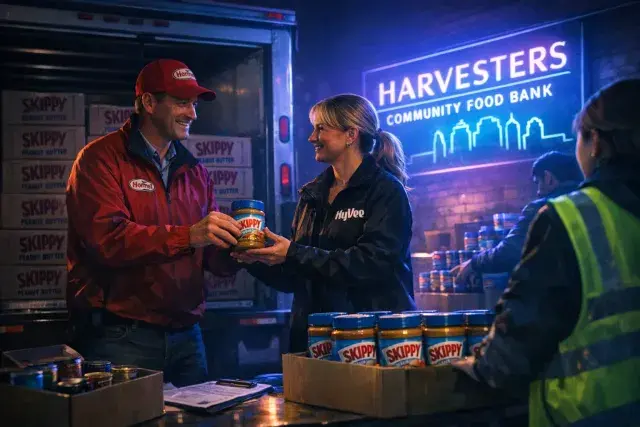
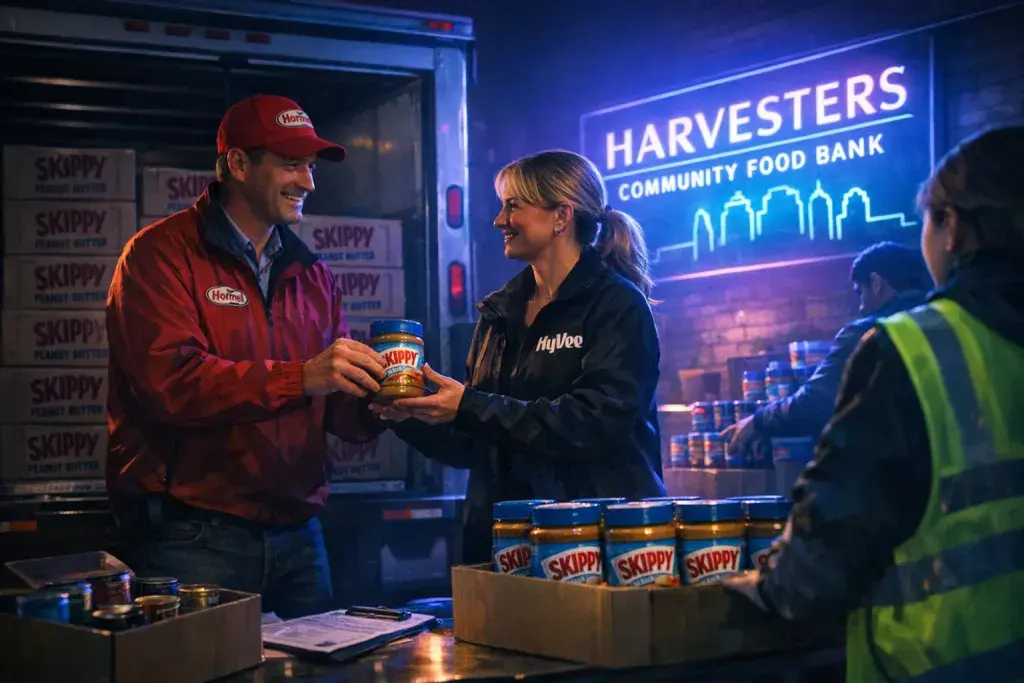
Hormel Foods and Hy-Vee delivered more than 26,000 units of SKIPPY peanut butter to Harvesters – The Community Food Bank on September 21. The contribution, enough for over 370,000 sandwiches, bolsters efforts to combat hunger in northwestern Missouri and northeastern Kansas. This act underscores corporate commitments to food security amid persistent need in the Kansas City region.
Roots in a National Hunger Relief Program
Hormel Foods launched its hunger program in 2018 through partnerships with grocery retailers nationwide. The initiative channels SKIPPY peanut butter to food banks, addressing a staple shortage in emergency pantries. Peanut butter stands out for its shelf stability, high protein content, and appeal across age groups, making it a priority donation for organizations like Harvesters.
Hy-Vee Ties Donation to Family Meals Focus
The gift aligns with Hy-Vee's National Family Meals Month activities across its eight-state footprint. Drew Holmes, Hy-Vee's senior regional vice president for the Kansas City market, highlighted the collaboration's role in tackling local hunger while promoting shared meals. Regular family dinners correlate with better nutrition and stronger household bonds, a pattern food insecurity often disrupts.
Protein Power in Hunger Relief
Doug Johnston, Hormel Foods senior customer executive, emphasized peanut butter's value as an accessible protein source for vulnerable households. Food banks prioritize such items because they provide sustained energy without refrigeration. This donation reflects broader corporate philanthropy from Hormel, which targets hunger and education, amid rising demand from economic pressures and supply chain strains.
Broader Impact on Community Nutrition
Efforts like this fill critical gaps where fresh proteins remain scarce. In the U.S., peanut butter supplies essential nutrients—fats, vitamins, and calories—for children and families facing meal shortfalls. By supporting Harvesters, Hormel and Hy-Vee advance long-term goals to end hunger, fostering resilience in regions where one in eight residents risks food insecurity.