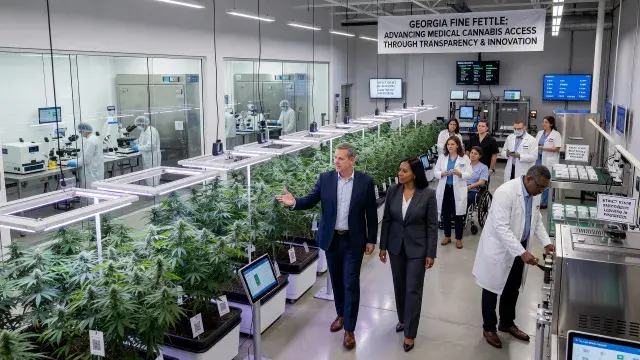
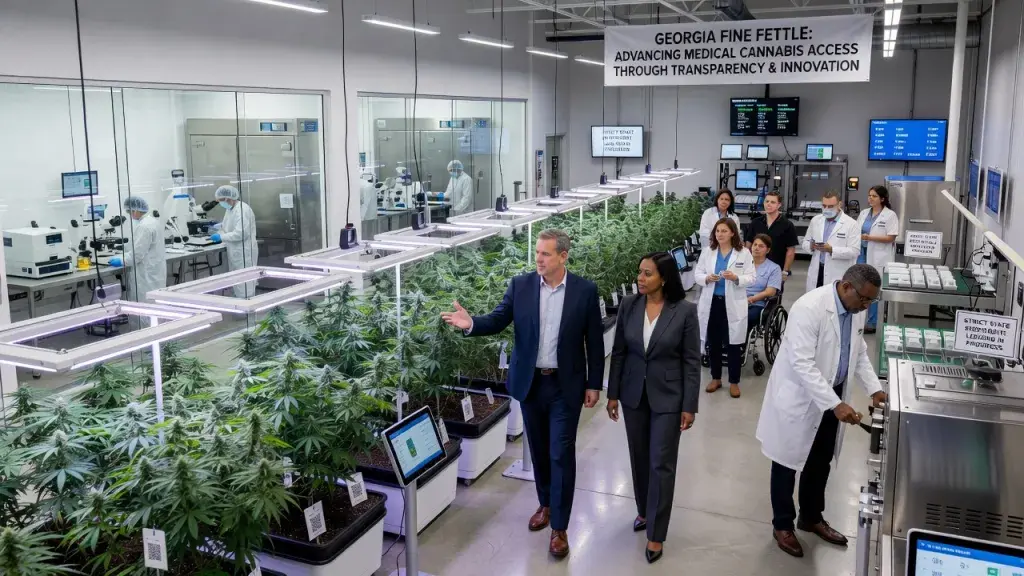
A decade after Georgia legalized low-THC medical cannabis oil, the program remains narrow, and lawmakers keep declining to expand it. In Macon-Bibb County, one of the state's three licensed medical cannabis producers is trying a different approach to break the logjam: invite the people who write the laws to walk the production floor themselves.
Georgia Fine Fettle, which grows, manufactures, and distributes cannabis products to dispensaries under the state's tightly regulated Class 1 license structure, hosted lawmakers, physicians, and patients for a facility tour led by market president Judson Hill. The goal was straightforward - pull back the curtain on cultivation, extraction, and batch testing so legislators stop legislating in the dark. That kind of operational transparency matters well beyond Georgia. Multi-state operators watching neighboring markets know that regulatory literacy at the statehouse level often determines whether a program stays stagnant or modernizes, whether that means expanding qualifying conditions or updating something as basic as the dispensary point of sale app maryland operators rely on to manage compliant sales and inventory tracking. dispensary point of sale app maryland
A Controlled Process, Not a Loophole
State Representative Anissa Jones, who joined the tour, made a point worth repeating: this is not loosely regulated agriculture. Every plant, every batch, every product moving from cultivation to dispensary shelf in Georgia's medical program is logged, tested, and accounted for under state oversight - the same seed-to-sale discipline that underpins compliant cannabis markets nationally. That distinction, controlled production versus the popular image of unregulated growing, is often what legislators need to see firsthand before they'll support expansion. Knowledge, as Jones put it, is leverage in committee rooms where cannabis bills have historically stalled.
What Senate Bill 220 and House Bill 227 Would Have Changed
Both measures died in their chambers this session, but their substance tells you where the pressure points are. SB 220 and HB 227 would have made it easier for patients to obtain a medical cannabis card - a process advocates say is currently cumbersome enough to discourage qualified patients from enrolling at all. The bills also would have updated allowable product forms, moving beyond the current limited formulations toward options clinicians say better match patient needs.
Dr. Elmore Alexander, who participated in the facility visit, framed the gap in practical terms: existing products treat a majority of patients adequately, but a meaningful minority - roughly a fifth, by his estimate - need product forms the state doesn't yet permit. For operators, that regulatory ceiling isn't abstract. It shapes SKU management, wholesale menus, and what dispensaries can legally stock, regardless of clinical demand.
Why This Matters for Operators and Investors
Georgia's cap of three licensed producers creates a market structure unlike most adult-use states with dozens of cultivators competing on wholesale pricing. Limited supply, limited product forms, and a cumbersome patient card process together constrain the addressable market these operators can serve.
- Slow card access suppresses registered patient counts, directly limiting dispensary foot traffic and revenue.
- Restricted product forms limit SKU diversity, constraining how operators differentiate on shelf.
- Legislative education efforts, like facility tours, function as a compliance and public-trust investment, not just outreach.
Until lawmakers move on access and product-form expansion, Georgia's medical cannabis operators remain boxed in by a framework built a decade ago - one that hasn't kept pace with either patient need or the operational tools, from testing protocols to retail technology, that mature medical markets now expect.