Inventory software tells a regulator what a dispensary sold. A separate category of software tells a regulator - or a bank - that the operator is actually following the rules behind that sale. These two jobs used to blur together in a lot of vendor pitches. They don't anymore, and the split matters for anyone running a licensed cannabis business today.
Self-audits, SOPs, and the paper trail regulators actually want
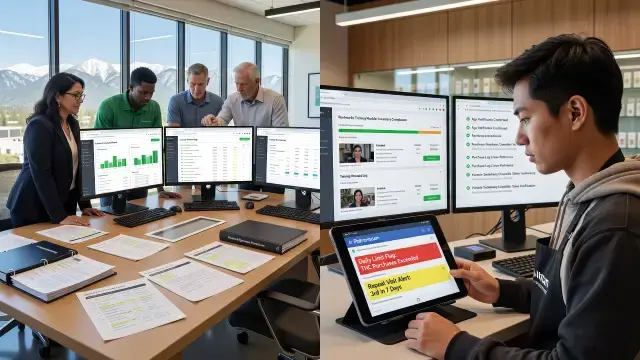
An inspector doesn't just want to know what's on the shelf. They want to see written procedures, training records, and proof that staff follow them. Simplifya, based in Lakewood, Colorado, builds its platform around exactly that: self-audits, SOP management, and license tracking across the states it covers. Rootwurks, out of Austin, takes a similar approach but leans harder into training - courses, checklists, and assessments developed alongside the cannabis law firm Vicente Sederberg. The logic here is straightforward. A budtender who can explain a purchase-limit rule during an inspection is worth more to an operator than a perfect inventory count with no documentation behind it. Regulators tend to agree.
Quality management isn't just for manufacturers, but it starts there
Cannabis manufacturers - the companies pressing gummies, filling vape cartridges, bottling tinctures - carry a different compliance burden than a retail storefront. Batch records, document control, corrective and preventive action logs: this is the same vocabulary used in food and pharmaceutical manufacturing, and for good reason. QT9 sells a quality management system built for that world, with audits and training folded in alongside CAPA tracking. For a multi-state operator running its own production, a weak QMS isn't an abstract risk. It's the difference between catching a labeling error in-house and explaining it to a state inspector after the fact.
At the counter: ID checks, purchase limits, and the human factor
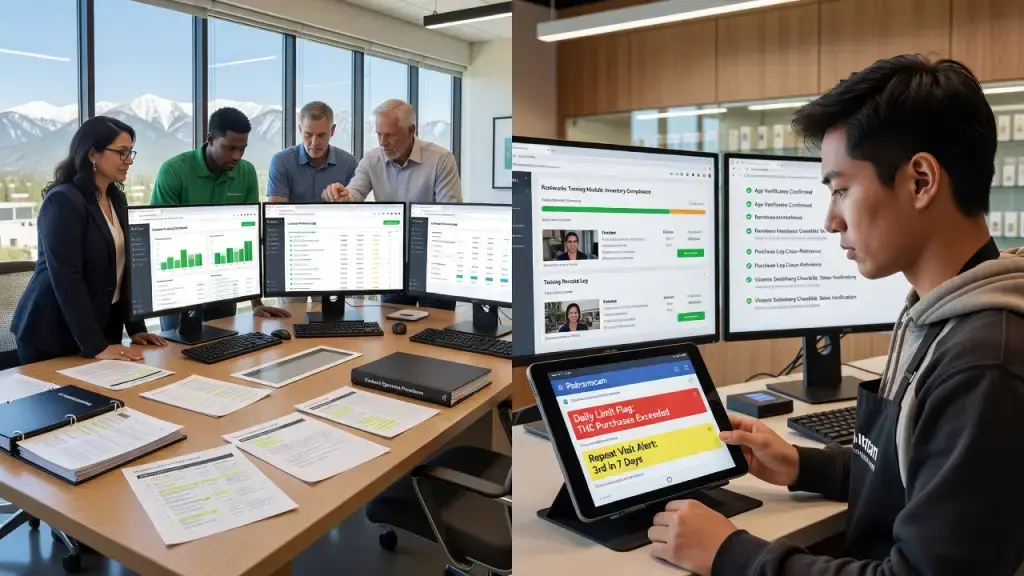
Most purchase-limit violations aren't intentional fraud. They're a customer who visited two dispensaries in one day, or a budtender who didn't catch a repeat visit during a rush. Patronscan's ID scanning exists to catch that gap - flagging repeat visits so staff can enforce daily purchase limits without relying on memory or trust. It's a quiet piece of software, but it sits right at the point where consumer protection and regulatory compliance overlap. States cap purchase amounts for a reason tied to diversion control, not retail convenience, and the counter is where that policy either holds or doesn't.
Track-and-trace still matters, just elsewhere
Metrc, the track-and-trace system used under contract in many states, still shows up in conversations about compliance software - because it is, in part, a compliance tool. But seed-to-sale tracking and state reporting have their own operational weight now, enough that they live on a separate page from the rest of this category. What's left here is narrower and arguably more interesting: the software that doesn't move product at all, just proves the operator is doing things right.
The bank's side of the ledger
Cannabis remains federally illegal, which means every bank or credit union serving a licensed operator has to document its due diligence constantly, not just at onboarding. Green Check, based in Bonita Springs, Florida, along with Shield Compliance in Seattle and RiskScout, give financial institutions tools for onboarding, ongoing monitoring, and reporting on cannabis accounts. CRB Monitor, out of Nashville, maintains a database of cannabis licenses and beneficial ownership information specifically for know-your-customer checks. An operator may never interact with these platforms directly - but the bank behind their checking account almost certainly does, and that relationship is often the thinnest thread keeping a cannabis business banked at all.
None of this software runs inventory, sets wholesale prices, or touches a point-of-sale terminal. It exists for a narrower purpose: making sure that when an inspector, auditor, or bank examiner asks for proof, the operator already has it.