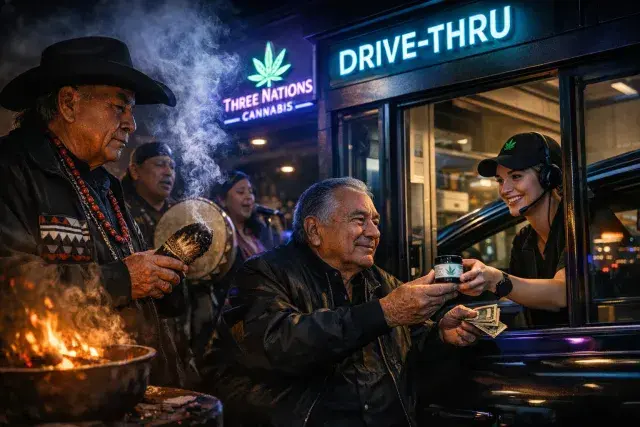
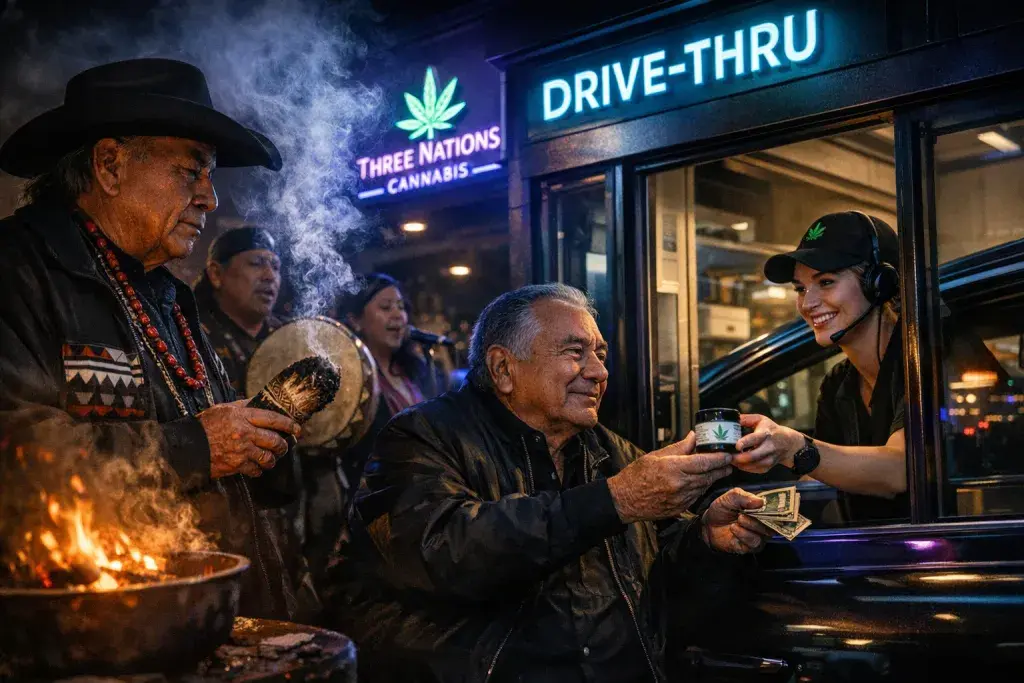
Three Nations Cannabis, owned by the Reno-Sparks Indian Colony, opened its drive-thru lanes Saturday afternoon following a traditional blessing with prayers and music led by tribal members. RSIC Chairman Arlan Melendez made the first purchase—a cream for shoulder pain—at the facility on South Virginia Street, marking Reno's debut drive-thru dispensary. Local leaders, including Mayor Hillary Schieve and County Commissioner Bob Lucey, attended the soft opening, signaling community support for the tribe's economic venture.
Tribal Ownership and Cultural Foundations
The Reno-Sparks Indian Colony, a federally recognized tribe of Paiute, Shoshone, and Washoe descendants, operates Three Nations Cannabis through its wholly owned Three Nations Management Corporation. This structure allows the tribe to retain full control over operations, distinct from state-regulated markets. The soft opening began with a cultural blessing, underscoring the integration of indigenous traditions into modern business practices amid Nevada's evolving cannabis landscape, where tribes leverage sovereignty to establish independent enterprises.
Strategic Expansion and Economic Goals
Situated in a 12,000-square-foot former Infiniti dealership at 11570 S. Virginia St., the dispensary currently serves customers via drive-thru only, with the indoor retail space set to open in April. Melendez highlighted the project's role in RSIC's diversification strategy, creating jobs for tribal members and the public while funding elder care, education, health services, housing, infrastructure, language preservation, and youth programs. A second drive-thru in Verdi, repurposing an old Taco Bell near Gold Ranch, opens March 12, with a third planned for Spanish Springs; both build on the tribe's established Tribal Smoke Shops.
Broader Implications for Tribal Sovereignty
Tribal cannabis operations like these reflect a growing trend where Native nations exercise federal sovereignty to enter state-legal markets on their terms, bypassing some regulatory hurdles faced by non-tribal businesses. This approach not only generates revenue but also reinvests in community needs, addressing historical underfunding in tribal services. As RSIC expands, the model demonstrates how cultural heritage and economic innovation intersect to bolster self-determination in regions with longstanding tribal presence.