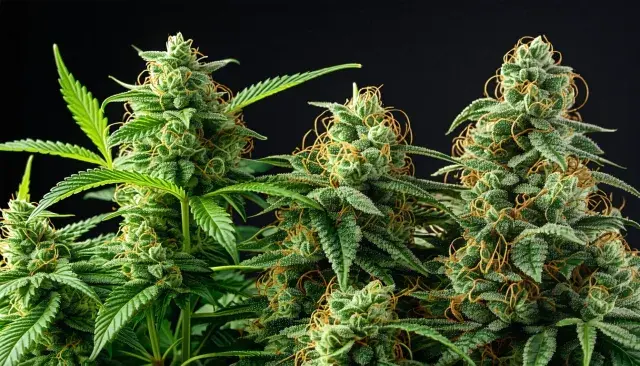

Livermore Falls, Maine, is extending its existing medical cannabis fee schedule to cover newly permitted recreational marijuana businesses - at least for now. The Select Board voted 4-1 on May 5 to use the current fee structure as a temporary measure while officials assess whether those fees actually reflect what local oversight costs the town. It's a practical stopgap, but the board's own skepticism about the fee levels makes clear a revision is likely coming.
What the Fees Are and Why They're Under Scrutiny
The existing schedule sets initial application fees at $1,500 per license type. Retail license renewals run $1,000, while manufacturing and cultivation renewals come in at $1,500. Those figures aren't unusual for small-market cannabis licensing - plenty of municipalities across legal states have adopted fee structures in that range, often modeled on what neighboring towns charge rather than any formal cost analysis.
That's precisely the problem Board Chairman Will Kenniston put on the table. He said he doubted the town's actual oversight work costs anywhere near $1,500 per license. Bryce Cobb, the town's code enforcement officer - who also serves as plumbing inspector, health officer, and E-911 addressing officer - acknowledged he doesn't yet have a breakdown of how much staff time cannabis compliance actually demands. He said he'll bring those estimates to the board's June 2 meeting.
Kenniston went further, suggesting that some municipalities are effectively overcharging cannabis operators. "I think they're personally gouging these businesses," he said. That's a pointed observation, and not without basis. In the early years of adult-use legalization in various states, local licensing fees were frequently set by gut instinct - or by jurisdictions that wanted to signal reluctance about cannabis even while technically permitting it.
The Operational Reality for Cannabis Operators Entering Small Markets
For any cannabis business considering a local license in a small Maine town, the fee structure matters - but so does the process behind it. Licensing costs are only one line item. Operators entering a new municipal market also absorb legal review costs, buildout expenses, state-level licensing fees, compliance software subscriptions, and staff training requirements before a single product hits the shelf.
In that context, a $1,500 initial application fee isn't catastrophic. But it stacks. And in smaller markets with lower revenue ceilings, the ratio of administrative cost to anticipated sales volume is worth scrutinizing. Board member Bruce Peary's instinct - to keep the machinery running, get applications processed, and revisit the fee question in the next fiscal year - reflects a reasonable operational posture. Holding up applications while debating exact fee levels would only delay operators who may already be waiting on state approvals to run in parallel.
What's worth watching here: Cobb will review actual staff hours and administrative workload before June. That kind of cost-basis analysis is exactly what fee structures in regulated industries should rest on. Licensing fees that exceed real oversight costs aren't just a fairness issue - they function as a de facto barrier to entry, which can distort the licensed market in ways that ultimately benefit unlicensed operators.
A Broader Pattern in Local Cannabis Licensing
Livermore Falls isn't the first municipality to find itself with a cannabis ordinance in place but no clear methodology for what fees should look like. Voters approved the amended ordinance on April 28, authorizing recreational businesses. The fee question came next - and without a survey of comparable town schedules, officials were essentially working from scratch.
This is common. Local officials responsible for cannabis oversight often come to it without cannabis-specific regulatory training, and fee schedules frequently get adopted by reference to neighboring jurisdictions rather than through any structured cost analysis. The result is inconsistency across a region, which creates compliance headaches for multi-location operators trying to model licensing costs across different municipalities.
Maine's adult-use framework places real responsibility at the local level. Towns can opt in or out, set their own fee structures within state parameters, and determine application processes. That local control has value - it allows communities to tailor oversight to their actual capacity - but it also means the regulatory environment for cannabis businesses can shift meaningfully from one town to the next, sometimes within a few miles.
What Comes Next
The June 2 meeting will be the one to watch. Cobb's time-and-cost estimates will give the board something concrete to work with instead of gut-level assumptions in either direction. If staff time and administrative burden turn out to be modest, there's a reasonable case for lower fees - and Kenniston has already said he wants that conversation. Peary has signaled he's open to adjustments, too, as long as the application pipeline keeps moving.
For any cannabis operator currently evaluating a Livermore Falls location, the practical takeaway is straightforward: the current fee schedule applies, applications can proceed, and the town has explicitly committed to revisiting whether those numbers hold up. That's not a guarantee of lower fees - but it is a board willing to ask the question, which is more than operators get in some jurisdictions.